
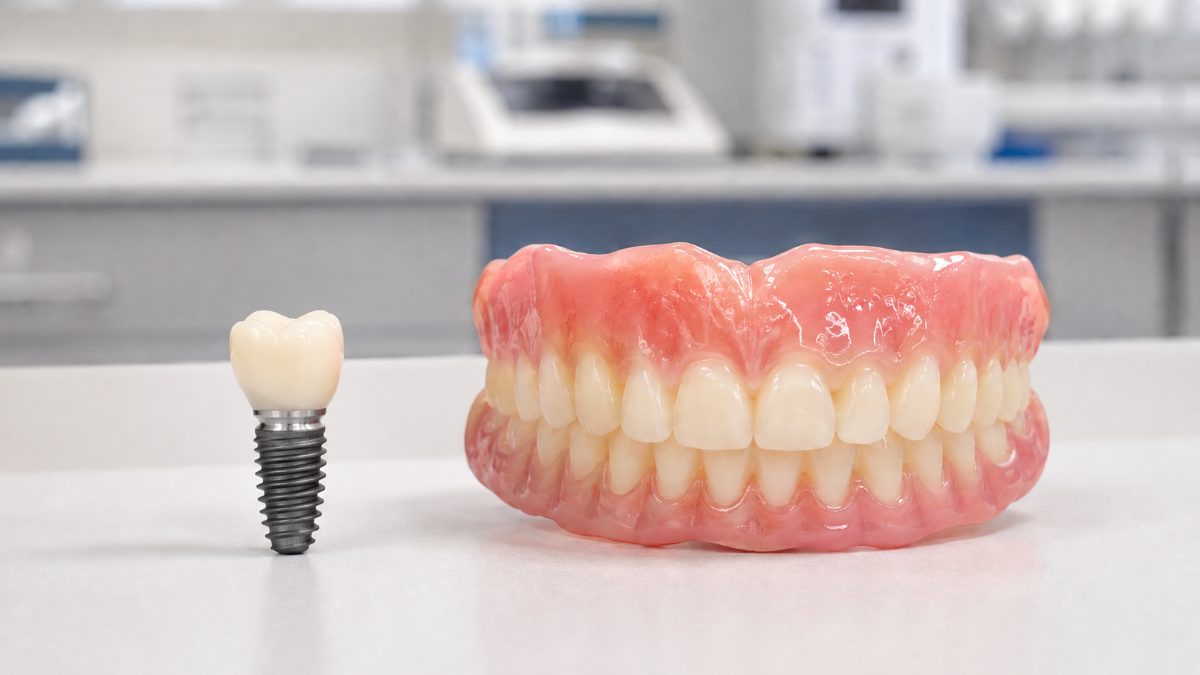
The real difference between dental implants and dentures is the root. An implant replaces it and loads the jawbone; a denture rests on the gum and does not. For patients in Humble, TX that single distinction drives everything else: bone changes, fit over time, cleaning, cost and how long treatment takes.
The Trade-Offs in Six Lines
- An implant replaces the root. A denture replaces only the visible tooth
- Bone behaves differently under each. This is the difference that compounds over years
- Fixed is not automatically better. Cleaning a fixed arch needs more dexterity, not less
- Dentures are faster. Implants are staged across months of healing
- There is a middle option that most people do not know exists
- Neither is universally right. The answer depends on your bone, your hands and your patience
Most write-ups of dental implants vs dentures read like a scorecard where implants win every row. That is not useful, and it is not accurate. Patients in Humble and Atascocita choose dentures for good reasons every week. This article sets out what genuinely separates them so you can tell which reasons apply to you.
Dental Implants vs Dentures: The Real Difference
Everything else follows from one fact.
A dental implant is a titanium post placed into the jawbone, which integrates with the bone and then functions as a root. A restoration is fitted on top of it. What you chew with is the restoration; the implant underneath does the job the natural root used to do.
A denture is a removable appliance that sits on the gum. It replaces the visible teeth and restores chewing, speech and facial support, but nothing goes into bone.
So the comparison is not really "fixed teeth versus false teeth". It is whether the replacement includes a root or not, and that determines what happens to your jaw over the following decade.
What Bone Does Under Each Option
Bone maintains itself in response to load. A tooth root transmits every bite into the surrounding bone, and that stimulus is why the bone stays where it is.
An implant re-establishes that. The American Dental Association describes dentures as replacements for missing teeth that can be taken out and put back in, and that removability is precisely why the bone underneath is not loaded the same way.
The practical consequence shows up as fit. Bone changes over time can affect how a denture fits, which is why a denture that was comfortable five years ago may need adjustment or replacement now. It is not that the denture changed shape. The ridge underneath it did.
This is also the honest answer to why implants cost more. You are not buying better-looking teeth. You are buying a root.
Dental Implants vs Dentures on Cleaning, Time and Stability
Three practical axes, and the first surprises people.
Cleaning
A denture comes out. You brush it at the sink, you brush your gums, and you can see what you are doing.
Fixed teeth stay in, which means cleaning happens in the mouth, around and under the restoration. That requires more manual dexterity, not less. It is a genuine reason some patients are steered toward removable options rather than away from them.
Time
A denture can be made and fitted comparatively quickly, and immediate dentures exist specifically so that patients are not left without teeth after extractions.
Implants are typically completed in stages, with a healing and integration phase measured in months rather than weeks. If there is a date you are working toward, that difference matters.
Stability
Full dentures may feel less stable than fixed options. That is the practice's own assessment, not marketing copy, and it is the most common complaint that brings denture wearers back.
An implant does not move. Whether that difference is worth the surgery and the months is the actual question in front of you.
The Middle Option Most People Miss
The comparison is usually framed as two choices. There are three.
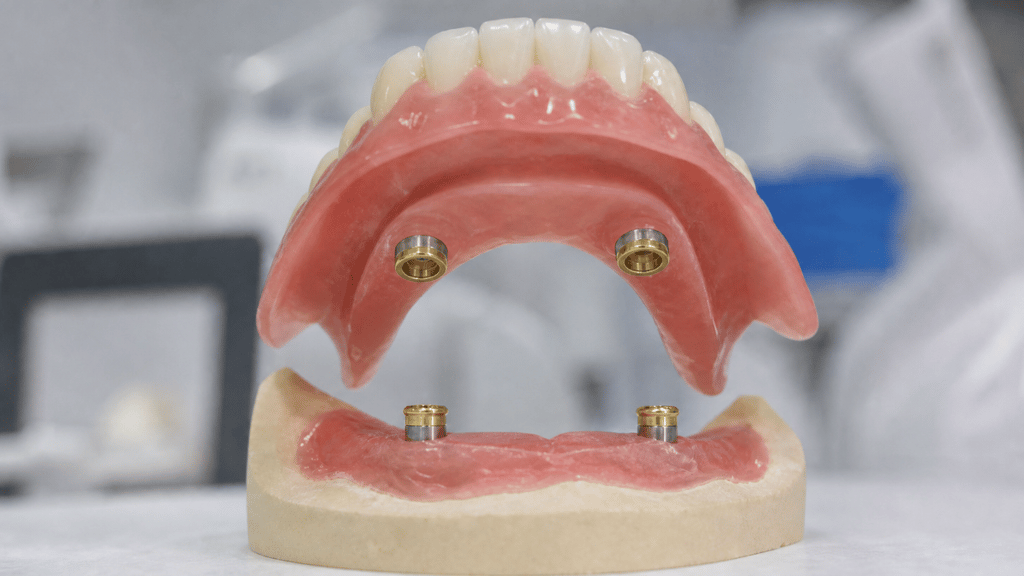
A snap-on denture is a removable denture that clips onto implants. The implants are placed in the jaw, attachments are fitted to them, and the denture snaps on and comes off again for cleaning.
It sits deliberately between the two:
- It prevents the slipping, clicking and sliding associated with a conventional denture
- It eliminates the need for adhesives and pastes
- It helps preserve jawbone density by stimulating bone, which a conventional denture cannot do
- It still comes out, so cleaning access stays easy
Aroma Dental specifically recommends this route for patients who lack the manual dexterity required to clean under a fixed implant bridge. See snap-on dentures.
How Long Each One Lasts
Neither is permanent, and the numbers are worth knowing before you choose.
| Implant | Conventional denture | |
|---|---|---|
| Expected life | 10 to 15 years, often longer | 5 to 10 years |
| What ends it | Rarely the implant itself; usually the restoration on top | Bone change altering the fit |
| Ongoing needs | Regular visits, good hygiene | Adjustments, relines, eventual replacement |
| Surgery involved | Yes | No |
The pattern is that implants last longer and cost more up front, while dentures cost less and are replaced more often. Longevity for both is influenced by oral hygiene and by attending regularly enough for changes to be caught.
Who Each Option Actually Suits
Reading the rows above, the honest summary is this.
An implant makes sense if you have sufficient jawbone support, you are willing to go through a surgical procedure and a staged timeline, and you want a replacement you do not remove. Suitability is assessed through clinical examination and imaging. See dental implants .
A denture makes sense if you are missing multiple or all teeth, you would rather avoid surgery, you want a faster route, or bone loss has narrowed the alternatives. Full, partial, immediate and flexible partial options all exist. See dentures .
A snap-on denture makes sense if a conventional denture has been loose, you want stability without a fixed appliance, or cleaning access matters to you.
Where bone is the obstacle rather than your preference, grafting may reopen the implant route. That is covered in what a dental bone graft involves, and the full set of routes is in options for missing teeth.
Questions Patients Ask When Comparing Implants and Dentures
Work Out Which Side of This You Are On
If you have been going back and forth on this, the deciding information is not on a website. It is on a scan, because bone is what opens or closes the implant route.
- Suitability assessed through clinical examination and imaging before any option is recommended
- A comparison between implants, dentures and bridges provided at the consultation, not one option pitched as the only one
- Both routes and the snap-on middle ground available at one practice in Humble, so you are not referred out to compare
Call Aroma Dental to book an assessment, or visit 7058 Farm to Market 1960 Rd E, Humble, TX 77346.