
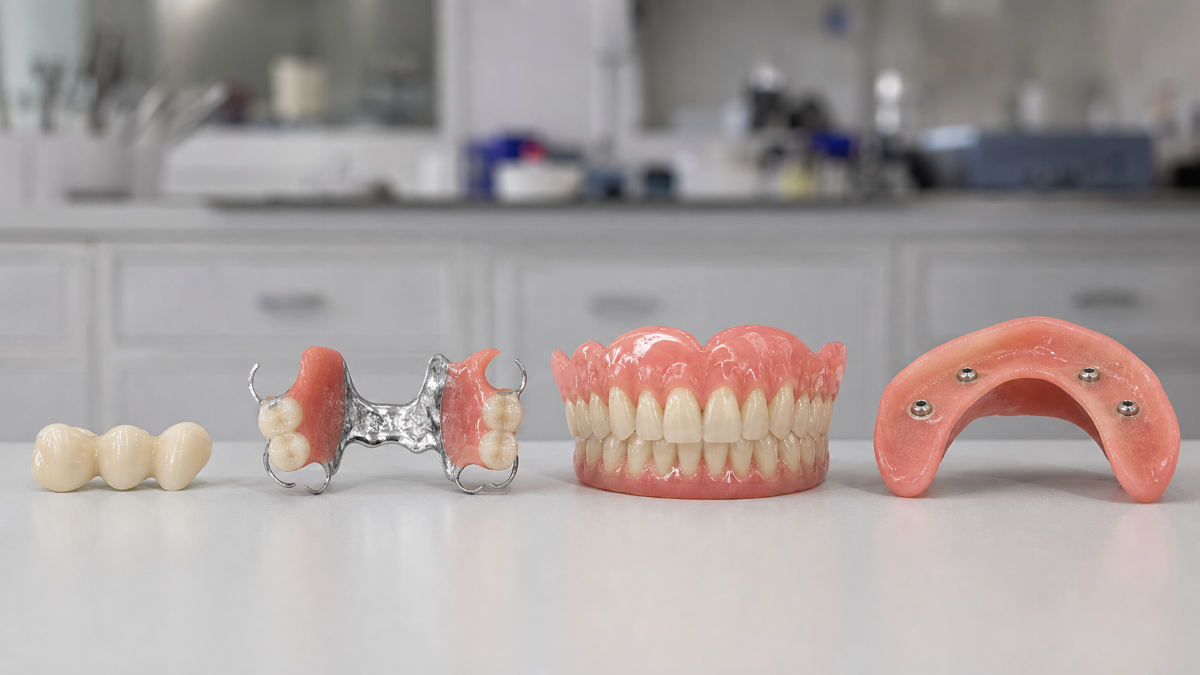
If dental implants are off the table, three routes remain: a fixed bridge carried by the neighboring teeth, a removable partial or full denture, or a snap-on denture that uses fewer implants than a full-arch case. For patients in Humble, TX the deciding factors are how many teeth are missing, how much bone is left, and whether surgery is possible.
What Is Actually Still Open to You
- A bridge is fixed and needs no surgery, but it needs healthy teeth on either side of the gap
- A partial denture asks nothing of the bone, which is why it stays available when other routes close
- A full denture is the fallback that always works, and immediate versions exist so you are not left without teeth
- Snap-on dentures sit in between, using as few as three implants in the lower jaw
- Sometimes the answer is timing, not treatment. Bone can be rebuilt, which reopens a door that looks shut
- "I was told no" often means "not yet", and it is worth finding out which of the two you were told
Patients usually arrive at this question from one of two directions. Either a dentist has said bone volume is insufficient, or the idea of surgery and a healing timeline measured in months is simply unappealing. Both are reasonable. This article covers how to fix missing teeth without implants, and what each route costs you in trade-offs rather than in dollars.
Why People Look for an Alternative to Dental Implants
Patients look for an alternative to dental implants for four broad reasons, and they do not all lead to the same answer.
Not enough bone. Implants are recommended for patients with sufficient jawbone support, because the post has to be anchored in bone that will hold it. Where height or width has reduced, the implant route narrows or closes.
Not wanting surgery. Some patients are clear that they do not want a surgical procedure, whatever the outcome. That is a valid preference and it is not argued with.
Not wanting the timeline. Integration takes months, not weeks. A patient who needs to be functional and presentable sooner has a legitimate reason to look elsewhere.
Medical factors. Healing capacity is reviewed as part of treatment planning, and that review sometimes changes the recommendation.
Which group you fall into matters, because the first and last are clinical and may change over time, while the middle two are yours to decide and will not.
The Fixed Route: A Bridge
A dental bridge replaces one or more missing teeth by anchoring the replacement to the teeth on either side of the gap. Nothing enters the bone, and nothing comes out at night.
At Aroma Dental in Humble, bridges are discussed when teeth are missing and implants are not the chosen route. Traditional, cantilever and Maryland designs are all used, with the material and design selected for strength, appearance and how your bite loads that part of the mouth. Zirconia and porcelain-fused-to-metal are both options.
The trade-off is real and worth stating plainly. The neighboring teeth carry the load, and preparing them changes them permanently. Typical bridge lifespan is 7 to 15 years, with material, bite forces and daily care deciding where in that range you land. See crowns and bridges.
A bridge is often the strongest choice when the gap is small, the adjacent teeth already need crowns, and you want a fixed result without surgery.
The Removable Route: Partial and Full Dentures
Dentures are removable appliances that replace missing teeth and restore chewing, speech and facial support. They ask nothing of the jawbone, which is exactly why they remain available when the implant route has closed.
The American Dental Association describes them as replacements for missing teeth that can be taken out and put back into the mouth, and that removability is the whole basis of the comparison.
Three variations matter here:
- Partials replace some teeth while the remaining natural ones stay in place and keep working
- Flexible partials use a different base material and suit some mouths better than a rigid design
- Full dentures replace a whole upper or lower arch, in immediate or conventional form
Immediate dentures are worth knowing about specifically. They are fitted so that a patient is not without teeth while healing progresses after extractions, and a conventional denture follows once the tissues have settled.
Expect an adjustment period for eating and speaking, adhesives where appropriate, and follow-up visits for comfort adjustments. Expected lifespan is 5 to 10 years, and because bone continues to change underneath, fit shifts over time. See dentures.
Dental Implants vs Partial Dentures for a Single Gap
For one missing tooth with sound neighbors, this is the comparison that actually gets made in the room. Weighing dental implants vs partial dentures comes down to what you are willing to have done and what you want left alone.
An implant is independent. It sits in its own space and leaves the teeth on either side untouched, which is its strongest argument. A partial is reversible, involves no surgery, and can be made quickly, but it clasps onto natural teeth and it comes out to be cleaned.
Bone is the tiebreaker again. Where an implant cannot be anchored, the question of dental implants vs partial dentures answers itself and the conversation moves on.
The In-Between Route: Fewer Implants, Not None
Patients who reject full-arch implant treatment on cost or surgical grounds often have not heard about snap-on dentures, and it is the option that changes the most minds.
A snap-on denture is a removable appliance stabilized by attaching to implants. It stops the slipping, clicking and sliding associated with conventional dentures, helps preserve jawbone by stimulating it, improves chewing efficiency and speech clarity, and removes the need for adhesives.
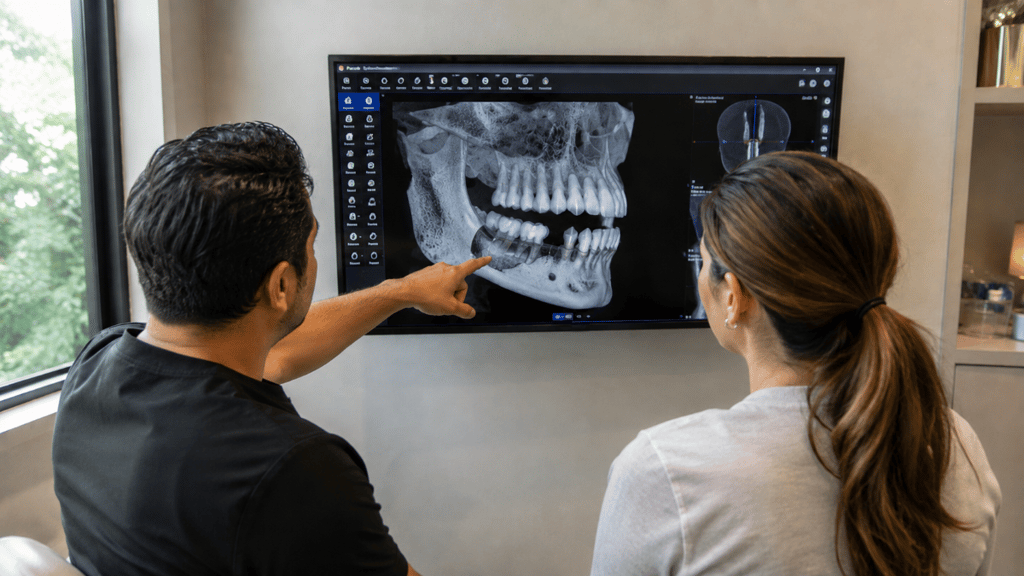
The numbers are smaller than people expect. A lower snap-on denture typically uses 3 implants, and an upper typically uses 2 to 4. Placement is planned with 3D CBCT imaging, then a healing period of 3 to 6 months follows before the attachments go on.
It also suits patients who lack the manual dexterity needed to clean under a fixed implant bridge, because the appliance comes out to be brushed. Maintenance is routine: the nylon retention inserts are replaced every 6 to 12 months as they wear. See snap-on dentures.
When the Real Alternative to Dental Implants Is Waiting
Not every "no" is permanent. Where the obstacle is bone volume rather than health or preference, bone grafting can rebuild the site and put implants back on the table later.
That is a longer road and it is not right for everyone, but it is the one option that gets missed, because it does not look like an alternative at all. It looks like a delay. What a graft involves, and how long it takes, is set out in what a dental bone graft involves.
Choosing Between Them Without Guessing
Every route above suits someone in Atascocita or Humble, and none of them suits everyone.
- One gap, healthy neighbors, no surgery wanted: a bridge
- Several teeth missing, natural teeth remaining, minimal intervention: a partial
- A full arch gone, and stability is the complaint: a snap-on denture
- A full arch gone, and speed matters most: a conventional or immediate full denture
- Bone is the only obstacle and you have time: grafting, then reassess implants
Suitability is assessed case by case, with imaging, before anything is recommended. If you want the fixed options in the same frame as these, the full comparison is in options for missing teeth, and the implant route itself is covered on the dental implants.
Questions Patients Ask About Alternatives to Implants
Find Out Which Routes Are Still Open to You
If you have been told implants are not for you, the useful next step is finding out whether that was about your bone, your health, or simply the plan someone drew up.
- Bridges, partials, full dentures, snap-on dentures and implants are all provided in one practice in Humble, so nothing is ruled out for lack of availability
- Suitability assessed through clinical examination and imaging, including 3D CBCT for implant-related planning
- A comparison between implants, dentures and bridges given at the consultation, rather than one route recommended by default
Call Aroma Dental to book an assessment, or visit 7058 Farm to Market 1960 Rd E, Humble, TX 77346.